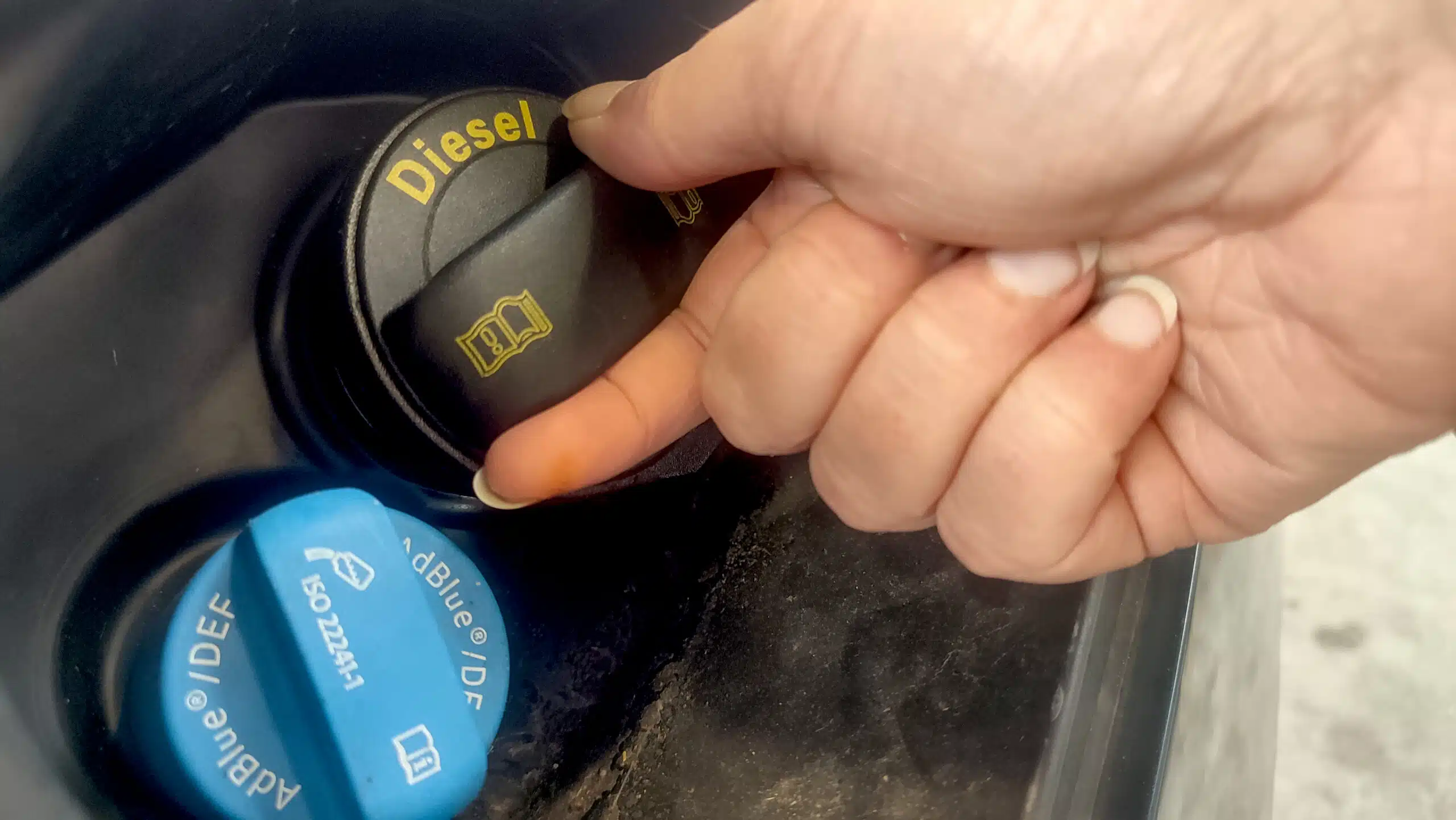
Many of the newer diesel cars now use a fluid called AdBlue. It’s important to note that AdBlue is a diesel exhaust fluid, not a fuel additive, and it plays a key role in reducing the harmful NOx emissions from the exhaust. Since September 2014, AdBlue tanks have been a legal requirement on new diesel cars to meet Euro 6 emissions standards.
You can learn more about exactly what AdBlue does and how it works in our guide.
However, as with any fluid or car part, you might see a warning light for AdBlue on the dashboard from time to time.
What is the AdBlue warning light?
The AdBlue warning light may look different depending on your car, ranging from a yellow sign showing fluid being poured out of a bottle or exhaust fumes with a wavy line underneath. You might also get a message on your driver display.
The warning light typically means that the AdBlue level is low and requires refilling. For some vehicles, the warning light will first be yellow or orange, and will turn to red once there is no AdBlue left. Once it goes red, the car will not restart when the ignition is turned off.
Can I drive with the AdBlue warning light on?
Some warning lights would require you to stop the car immediately due to safety concerns. While this isn’t the case with AdBlue, it’s really important not to ignore the warning. Generally, the warning typically appears with a remaining driving range of between 500 and 1,500 miles, depending on the vehicle. Some cars will also show a mileage countdown on the information cluster.
There is still plenty of time to refill AdBlue when the warning light comes on, but you should be aware that if it gets too low, the car may not restart until a minimum amount of AdBlue is added and the system recognises the refill.
How often do I need to fill up AdBlue?
How often you need to fill up can depend on the engine, tank size and your driving habits. Generally speaking, your car will consume around 1 litre of AdBlue for every 350-600 miles on average, and AdBlue tank sizes can vary significantly by vehicle; they typically range from 8 to 25 litres. With that in mind, a full tank of AdBlue could last from 3,000 to 12,000 miles. You should always check your owner’s manual or manufacturer’s guidance.
What happens if you top AdBlue up and the warning light is still on?
In some cases, if you’ve filled the tank back up with AdBlue and the warning light is still on, it’s recommended to go for a short drive to help reset the warning and allow the refill to be registered by the system. It can sometimes take a little bit of time to go off, especially if the tank was empty.
Can you check your AdBlue levels?
You usually won’t need to check the level of your AdBlue fluid and just keep a look out for the warning light on the dashboard. However in some vehicles you will be able to check the DEF (diesel exhaust fluid) range in the message centre.
Can I fill up AdBlue myself?
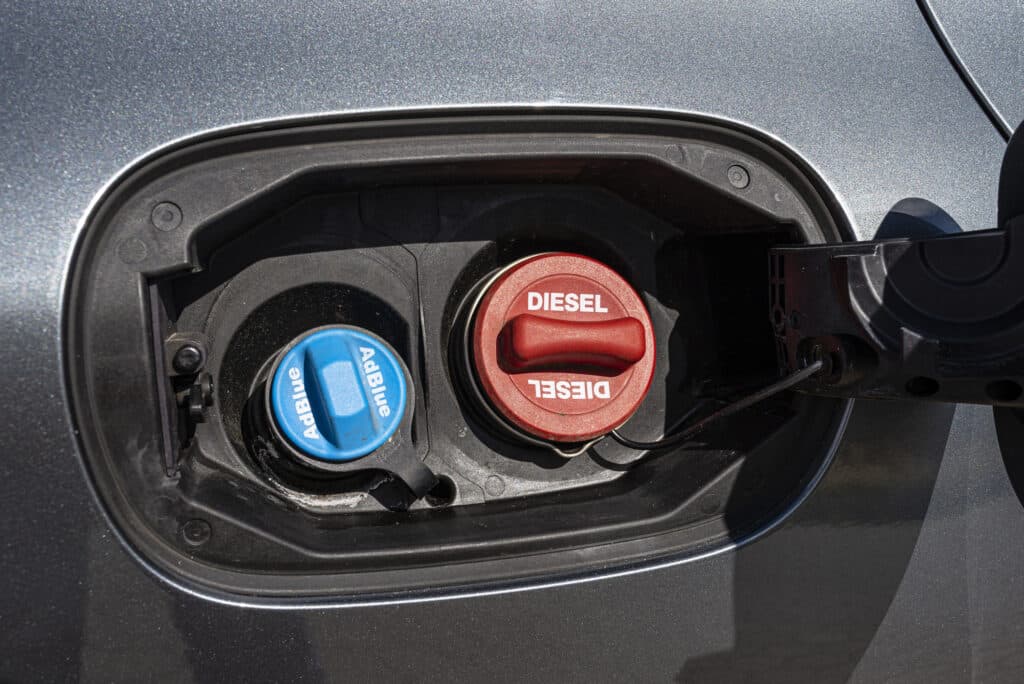
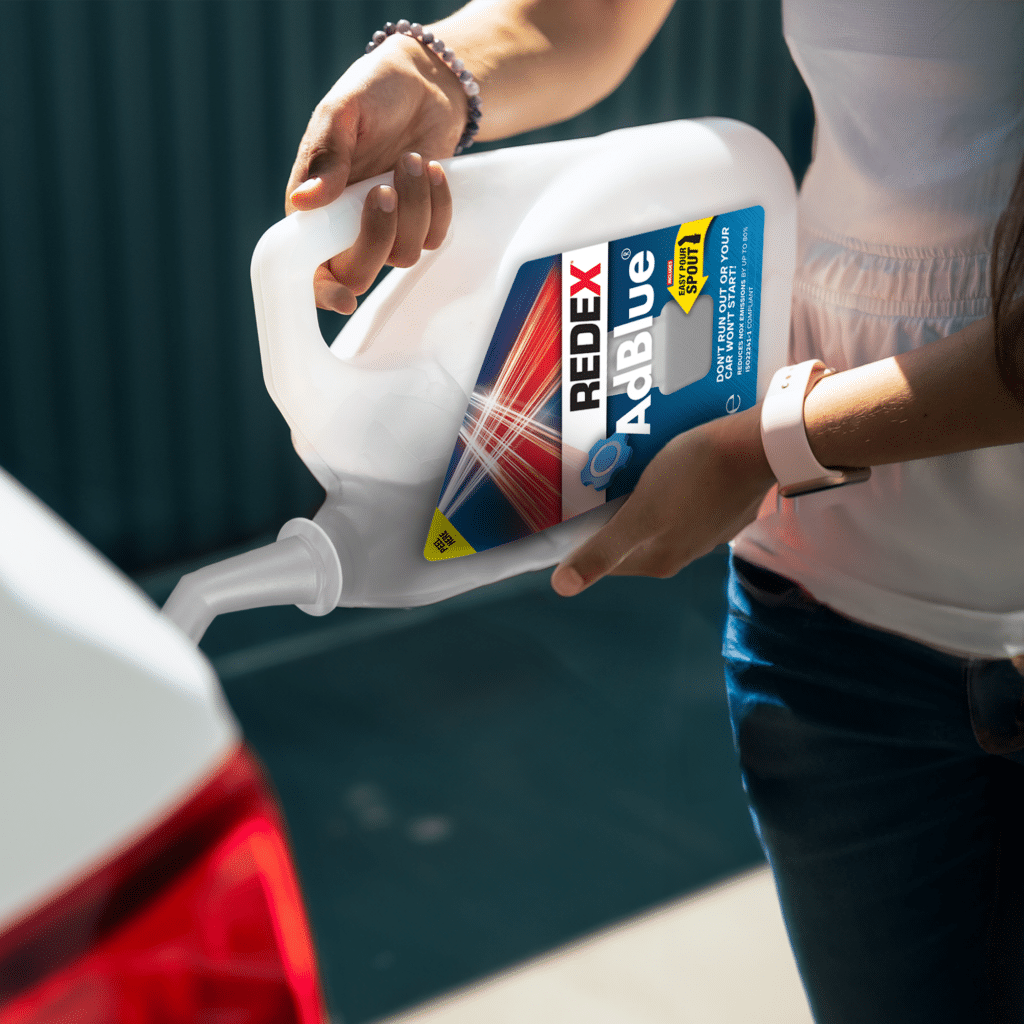
If you’re wondering whether you need to take your car to the garage once the warning light comes on, the answer is no! You should be able to refill AdBlue yourself. The filler cap is usually right next to the diesel filler cap.
Our 4, 5 or 10-litre AdBlue all come with an easy pour spout, making it easy to just pour it cleanly into the tank.
If you can’t find the AdBlue filler cap, check your handbook as this can tell you where to locate it and how much AdBlue the tank holds.
For more blogs and advice on diesel vehicles, check out our blog today.