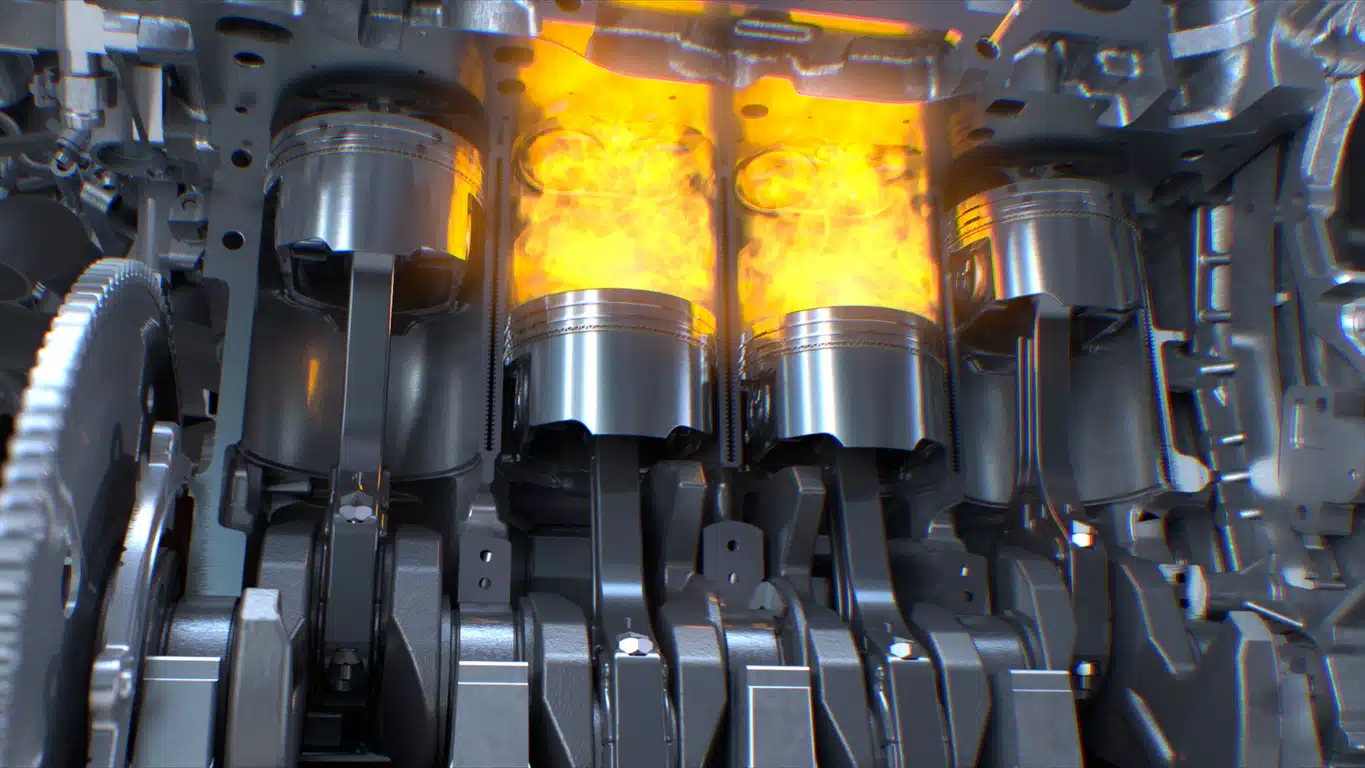
Every time you turn the key or push the start button, a series of small, controlled explosions takes place under the bonnet, which, through clever engineering, are converted into movement. This is the basis for an internal combustion engine (ICE).
For over a century, ICEs have been the primary power source for almost everything on wheels, from everyday family hatchbacks and motorbikes to heavy goods vehicles that haul multiple tonnes of cargo. Their versatility can even be seen in things like lawnmowers, industrial generators, and farm equipment. They have dominated transport for so long because fuel is energy-dense, easy to transport, and quick to refill.
Understanding how your engine works makes it easier to spot early warning signs, avoid unnecessary breakdown bills, and keep your running costs as low as possible.
How does an internal combustion engine work?
At its core, an internal combustion engine converts the chemical energy stored in fuel into thermal energy (heat), which expands rapidly to create mechanical energy.
Unlike an external combustion engine – such as a traditional steam train, where fuel burns outside the cylinder to heat water into steam – an ICE burns its fuel directly inside a sealed chamber. Burning the fuel inside the engine makes the whole unit far more compact, efficient, and responsive.
To create power, your engine needs three basic elements: air, fuel, and a heat source.
Intake: Air and fuel enter the combustion chamber (the cylinder).
Compression: A piston moves up, squashing the air-fuel mixture into a tight space.
Combustion: The mixture ignites. The sudden expansion of burning gas forces the piston back down with immense force.
Exhaust: The piston moves back up to push the leftover burnt gases out through the exhaust pipe.
That downward force on the piston turns a crankshaft, transforming up-and-down movement into the rotating motion that ultimately spins your wheels.
What are the main functions of an internal combustion engine?
While the ultimate goal is moving your car forward, an ICE performs several critical jobs simultaneously to keep your vehicle running smoothly.
Converting chemical energy into mechanical power
The engine’s primary job is extracting the raw energy locked inside petrol or diesel and turning it into kinetic force.
Producing torque
Torque is the rotational twisting force generated by the engine. High torque at low speeds helps you haul heavy loads or pull away cleanly from a standstill without stalling.
Powering the drivetrain
The rotational energy generated by the crankshaft travels through the gearbox and driveshafts directly to the wheels, moving the vehicle forward or backwards.
Driving essential auxiliary systems
Your engine does more than just push the car. Auxiliary belts connected to the moving engine continuously drive vital components, including:
- The alternator charges your 12V battery and powers the electronics.
- The water pump circulates coolant to prevent the unit from overheating.
- The air conditioning compressor, which keeps the cabin comfortable.
- The power steering pump, which assists your steering on older hydraulic setups.

What are the different types of internal combustion engines?
Not all internal combustion engines are built the same way. Engineers select particular engine types and design them differently depending on factors including fuel economy, power output, or footprint.
By fuel type
- Petrol uses highly volatile fuel mixed with air and ignited by a spark. Petrol engines deliver smooth acceleration and quiet operation.
- Diesel uses a heavier fuel that ignites under extreme pressure without needing a spark plug. Diesel engines deliver excellent fuel economy and high torque for long-distance driving.
- LPG & Natural Gas are alternative liquid or gaseous fuels that burn cleaner than traditional petrol, sometimes used in commercial fleets or aftermarket conversions. Some brands, such as Dacia, even fit their cars with bi-fuel engines, meaning they can use both LPG and petrol.
- Biofuels & Ethanol are renewable fuels derived from organic matter, often blended into standard petrol (like UK E10 petrol) to cut down overall fossil fuel usage.
- Hydrogen burns pure hydrogen gas in the combustion chamber, producing no carbon emissions from the tailpipe since there’s no carbon in the fuel. However, the high combustion temperatures involved still generate nitrogen oxides (NOx), so hydrogen combustion engines require exhaust aftertreatment to reduce this pollutant — it’s not a true zero-emissions technology in practice, though it’s still an exciting area of development.
By ignition method
- Spark ignition is used in petrol cars. An electrical spark from the spark plug ignites the air-fuel mixture at an exact millisecond.
- Compression ignition is used in diesel cars because diesel will not ignite from a spark at normal temperatures. The engine squeezes air so tightly that it reaches extreme temperatures, causing diesel fuel to ignite spontaneously the moment it is injected.
By number of strokes
- 4-stroke engines are found in all modern cars. The piston travels up and down four times (Intake, Compression, Power, Exhaust) for every single power stroke. It offers excellent fuel efficiency and lower emissions.
- 2-stroke engines are consigned to the history books for modern production cars, however, they are still popular on machinery, mopeds, and motorbikes. While they complete the entire process in just two movements of the piston and are very powerful for their size, they are less fuel efficient and produce more emissions. Redex 2-stroke Oil is specifically designed to keep these smaller high-revving engines protected against wear.

By cylinder arrangement
- Inline engines arrange cylinders in a single straight row. Simple, reliable, and common in everyday cars.
- V-engines split cylinders into two angled banks forming a ‘V’ shape (e.g., V6 or V8). Allows manufacturers to fit larger, more powerful engines into smaller engine bays. You’ll typically see these engines on performance cars and SUVs, though most heavy goods vehicles actually favour simpler, lighter inline-6 engines for their combination of torque, reliability, and easy maintenance.
- Flat (boxer) engines lay cylinders horizontally opposite each other. Lowers the vehicle’s centre of gravity for improved handling, seen in the Porsche 911.
- Rotary engines use a triangular rotor spinning inside an oval chamber instead of traditional up-and-down pistons. They’re known for incredibly smooth power delivery at high revs, but they do require more oil and adjusted maintenance.
Advantages and disadvantages of internal combustion engines
While modern vehicle technology continues to evolve, understanding the practical trade-offs of an ICE helps you get the most out of your current car.
Advantages
High power output: ICEs deliver exceptional power relative to their physical size, allowing small engines to pull heavy loads with ease.
Long driving range and fast refuelling: Liquid fuel holds a huge amount of energy. You can top up a tank in under five minutes at any local forecourt and drive hundreds of miles without stopping.
Proven reliability: With over a century of manufacturing refinement behind them, modern engines are exceptionally durable when properly maintained.

Disadvantages
Carbon emissions: Burning fossil fuels creates carbon emissions and microscopic particulates, requiring modern exhaust filters and diesel particulate filters (DPF) to keep tailpipe pollution mostly contained.
Fuel consumption costs: Every drop of fuel counts. Dirty engine parts like clogged fuel injectors lead to incomplete combustion, wasting fuel and raising your cost per mile.
Mechanical complexity: Hundreds of moving parts operate under high temperatures and pressures, meaning poor maintenance can lead to expensive repair bills over time.
Whether your car runs on petrol or diesel, keeping the combustion process inside your engine clean is the single best way to protect your wallet and your engine. Over time, carbon deposits build up on fuel injectors and valves, causing rough idling, reduced power, and increased fuel consumption. Adding a shot of Redex to your tank at fill-up helps to clean away these deposits, allowing you to stretch every tank further and keep running costs down.