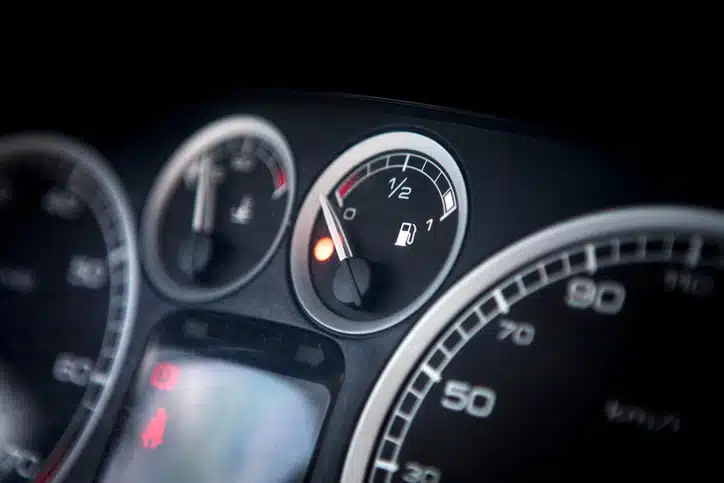
Running low on fuel isn’t just an inconvenience, it could also have an impact on the health of your vehicle too. In this blog, we’ll take a closer look at why you shouldn’t let your fuel tank run too low and how far you can drive once the fuel warning light comes on.
How far can you drive on a low fuel warning light?
Car manufacturers take into account that many people will wait for the fuel light to come on before filling up the car. This is why you’ll typically get two low fuel warnings, one with the light on steady which means it’s time to fill up, and the second when it’s flashing, which indicates you’re about to run out of fuel.
There’s a number of factors that can affect how far you can drive on a fuel warning light. This includes the make and model of your car, your driving habits and how much weight the car is carrying.
What happens if you run out of fuel completely?
If your car runs out of fuel completely, you’ll notice a drop in your car’s performance. This could include intermittent power surges, engine backfiring or sputtering. There’ll also be a drop in hydraulic power being fed into your power steering, and your brakes will lose their power assistance, meaning you can still steer and stop the car, but both will require noticeably more physical effort.
What’s more, it might cause overheating issues with the car’s fuel pump. This is because the fuel pump uses the fuel in the tank to cool and lubricate itself, which is difficult when there’s no fuel left.

Can running out of fuel damage your car?
When the tank is left to run completely dry, the engine will start to draw in air along with the last dregs of fuel. This affects the air-fuel combination required for combustion, which can make it harder for the engine to start again.
In most cases, the engines in modern cars are built to withstand this issue, but if you drive an older car then you could be at risk of damaging it. When a car’s low on fuel, it’ll draw anything in to keep itself going, including the debris and particles that build up at the bottom of the fuel tank. Older cars are particularly susceptible to pulling through debris, which is why you should get in the habit of never allowing the fuel level to sink too low.
If debris from the fuel tank is drawn into the fuel lines and directed towards the engine, it can lead to blockages in the filters which prevents the engine from performing at its best or even not starting at all. The sediment can be difficult to remove once it’s lodged in the fuel filter, which is why we’d always recommend adding a shot of Redex System Cleaner to help keep the system clean.
What about the damage to a diesel car?
If you drive a diesel car, it’s even more important not to let the tank run completely empty. That’s because the powerful fuel injectors in diesel engines start pulling in lots of air once there’s no more fuel in the tank, and this can have a catastrophic effect on different components within the system.
When the fuel system becomes completely clogged with air, it damages the injectors and filters, and can make it incredibly difficult to get the engine turning over again.
Unlike with a petrol engine, which will turn over with a couple of pumps of the accelerator after refuelling, getting a diesel going again may need a professional with the right tools.
For a diesel engine to start again after running empty, it’s often the case that air needs to be bled from the fuel system.
This can be an expensive and time-consuming process that should be left up to the professionals, as they’ll need to remove the filters, clean and blow out all the fuel lines, and potentially replace the injectors and pump.

What to do if you’ve run out of fuel while driving
If you’ve caught it in good time, then you can calmly make your way to the nearest petrol station to fill up. However, in instances where you haven’t been so lucky, you’ll need to safely pull over, turn on your hazard warning lights, and assess the situation.
Is there a nearby petrol station within walking distance? If so, you might be able to buy the fuel you need, walk back to your car, and fill the fuel tank before setting off again.
If you’ve found yourself with an empty tank and you’re too far away from a petrol station to walk there, then the safest option is to call for assistance.
Whether you call a friend to come to your rescue with a transportable fuel tank or contact roadside assistance, ensure you stay safe while you wait. Staying inside the car is likely to be the safest option if you’re parked on a quiet street. However, you should wait safely behind a barrier or away from traffic if you’ve stopped on a dual carriageway or motorway.
It’s important to remember that running out of fuel where it causes disruption, like on the motorway, police can issue a £100 fine and 3 penalty points. If the police have evidence to show that you contributed to an accident by running out of fuel, you could be hit with a £5,000 fine and 9 penalty points.
3 tips to restart your car after running out of fuel
When you’ve safely refuelled your car and ready to get the engine running again, it’s important to follow these tips to make sure the engine fires without putting too much strain on the ignition, starter motor and battery.
- Press the accelerator pedal to engage the fuel injectors more quickly. This will get the fuel circulating through the engine to help the car start.
- Turn the ignition to the ‘on’ position without starting the engine. Doing this a couple of times will allow the electric fuel injectors to begin circulating fuel without a high demand for power being placed on the battery.
- Make sure the car has had plenty of time to cool down. Running out of fuel could cause the fuel pump to overheat and fail, and it may take a while for this to drop back to a normal operating temperature, even after refuelling.
So, next time your fuel gauge looks a little low, don’t hesitate to find the nearest petrol station to fill up. You should also consider looking after your tank with our System Cleaners, available for both petrol and diesel.