Fuel injectors are an essential part of your car’s engine, delivering fuel at the right time to ensure clean and efficient combustion. However, without regular maintenance, fuel injectors can develop faults or become clogged, so you need to know how to spot the signs of a bad fuel injector how to fix it.

Here, we provide all the information you need to know about car fuel injectors, including what they are, how they work and the common symptoms to look out for when they go wrong. Use the links below to navigate the guide.
- What Are Fuel Injectors?
- How Do Fuel Injectors Work?
- Types of Fuel Injection Systems
- Signs and Symptoms of a Faulty Fuel Injector
- Maintaining Fuel Injectors
- How Much Does It Cost to Replace Fuel Injectors?
What Are Fuel Injectors?
Fuel injectors spray fuel into a car’s engine using electronic controlled valves, capable of opening and closing many times a second. They have an atomising nozzle that distributes the petrol or diesel evenly, for optimum combustion and efficiency.
Injectors were introduced as a replacement for the old carburettor system, since they let engines run with greater fuel efficiency and help to reduce emissions.
A car generally has one fuel injector per cylinder. So, if you drive a four-cylinder car, it will most likely have four fuel injectors.
How Do Fuel Injectors Work?

Fuel injectors control the volume of fuel delivered to the combustion chamber, ensuring the right amount is injected at the right time. Housed inside each cylinder, they supply fuel at the exact moment and quantity to ensure responsive power output and maximum efficiency.
- The fuel pump pushes petrol or diesel through the fuel lines to the injectors.
- The ECU (engine control unit) uses sensors to work out the right time to fire the injectors and spray fuel into the combustion chamber.
- When the ECU activates the injector, pressurised fuel is sprayed into the combustion chamber through the nozzles. Because the nozzles are so small, the fuel is atomised, which makes it burn more efficiently.
Take a look at our video below to learn more about how fuel injectors work…
Types of Fuel Injection Systems
As technology has advanced, different variations of fuel injection systems have emerged – with engineers coming up with new ways to help injectors perform more efficiently. Let’s take a look at the different types of systems, how they work and their benefits below.
Throttle body injection
Serving as a stepping-stone between the old carburettors and modern MPFI (Multi-Port Fuel Injection) or DI (Direct Injection), throttle body injection used one or two injectors housed inside a central throttle body, above the intake manifold, to inject fuel.
While it was more fuel efficient than carburettors and allowed manufacturers to reduce emissions without completely redesigning the engine block, the nature of having one or two points of injection led to an uneven fuel distribution throughout the cylinders.
In time, they were phased out for multi-point injector systems.
Port fuel injection
Port fuel injection, also known as multi-point fuel injection, is among the most widely used types of injection systems. Injectors are positioned near the intake port of each cylinder, where they atomise fuel into a fine spray. This mixes with incoming air in the intake port before entering the combustion chamber. They’re more accurate and precise than single-point injectors, and make it much easier to achieve the correct fuel-air ratio in the engine.
Sequential fuel injection
Sequential fuel injection is a type of multi-point fuel injection wherein the injectors can fire independently in a sequence, rather than all at once. Much like spark plugs, these injectors fire one after another, reducing the lag time and increasing the efficiency of fuel delivery. This improves fuel economy and helps to reduce emissions.
Signs and Symptoms of a Faulty Fuel Injector
Sometimes fuel injectors can develop faults which impact on their performance or cause breakdowns. This is often due to them becoming clogged with debris, although some mechanical and electrical issues can also affect fuel injectors.
Here, we take a look at some of the common signs and symptoms associated with a faulty fuel injector.
Check Engine Warning Light
The most common sign of a bad fuel injector is the check engine warning light, which appears on the dashboard. As soon as an injector isn’t doing what it should, this light will come on. (In other words, if it’s adding too much or too little.)
Although there are a few different reasons why a check engine light can switch on, it could be down to a fuel injector. The ECU triggers the warning light when the injector is delivering too much or too little fuel.

Misfiring or Vibrating Engine
Does your car often misfire? Or, maybe there’s a delay after you press the accelerator pedal? Both of these symptoms can be caused by a faulty fuel injector, most likely a clog or blockage in the nozzle.
If the injector can’t deliver the dose of fuel called for by the ECU, the fuel-air mix in the combustion chamber will be off, which can lead to misfiring or a sudden drop in acceleration. That’s why it’s so important to keep your car’s fuel injectors clean and free from blockages.
Rough Idle
If your car’s idle noise has changed and feels rougher, the fuel injectors may not be delivering fuel as they should. As with misfiring, this is normally down to the injector nozzles being clogged with particles, which interfere with the atomisation and spray of the fuel.
Several faults can cause a rough idle noise, including a bad spark plug or a dirty air filter, but clogged injectors are one of the most common reasons for this.
Engine Stalling
Does your engine randomly stall or cut out without you doing anything to cause it? This could be due to a lack of fuel reaching the engine from the injectors. If too little fuel is reaching the combustion chamber, the ECU will stop the engine, causing a stall.
Engine stalling as a result of a failed injector normally occurs when the nozzles are badly blocked or when there’s a fuel leak where the injector connects with the fuel lines.
Fuel Leak
If you can smell fuel strongly while driving and your car is exhibiting other symptoms on this list, you might be looking at a fuel leak. Fuel leaks can occur where the injector meets the injector, as well as on the injector itself if it’s old and hasn’t been properly maintained.
By checking the fuel injector, you’ll be able to tell if there’s been a leak because there will be fuel on or close to the injector.
You might also notice a drop on the fuel gauge.
Poor Fuel Economy
A faulty fuel injector can lead to a significant drop in fuel economy. This is because the ECU is calling for more fuel from the injector but not receiving it in the combustion chamber. The less fuel reaches the engine, the lower your fuel economy.
You may experience poor fuel economy when the injectors are clogged or leaking.

Failed MOT for Emissions Reasons
With thousands of vehicles failing the MOT for emissions reasons, drivers need to do all they can to reduce the volume of harmful emissions their car is producing before their MOT – and making sure the fuel injectors are clean and well-maintained plays a big part in this.
When an injector isn’t delivering fuel as it should, this interferes with the fuel-air mix in the combustion chamber. As a result, some fuel isn’t burnt off – meaning more harmful emissions are sent to the exhaust system.
If you want to try to reduce your emissions before an MOT, checking and cleaning the fuel injectors is an essential maintenance task.
Maintaining Fuel Injectors
Maintaining fuel injectors is a simple-to-follow, multi-step process.
Firstly, there’s the fuel. Using a high-quality fuel can help to clear deposits that can cause issues if neglected.
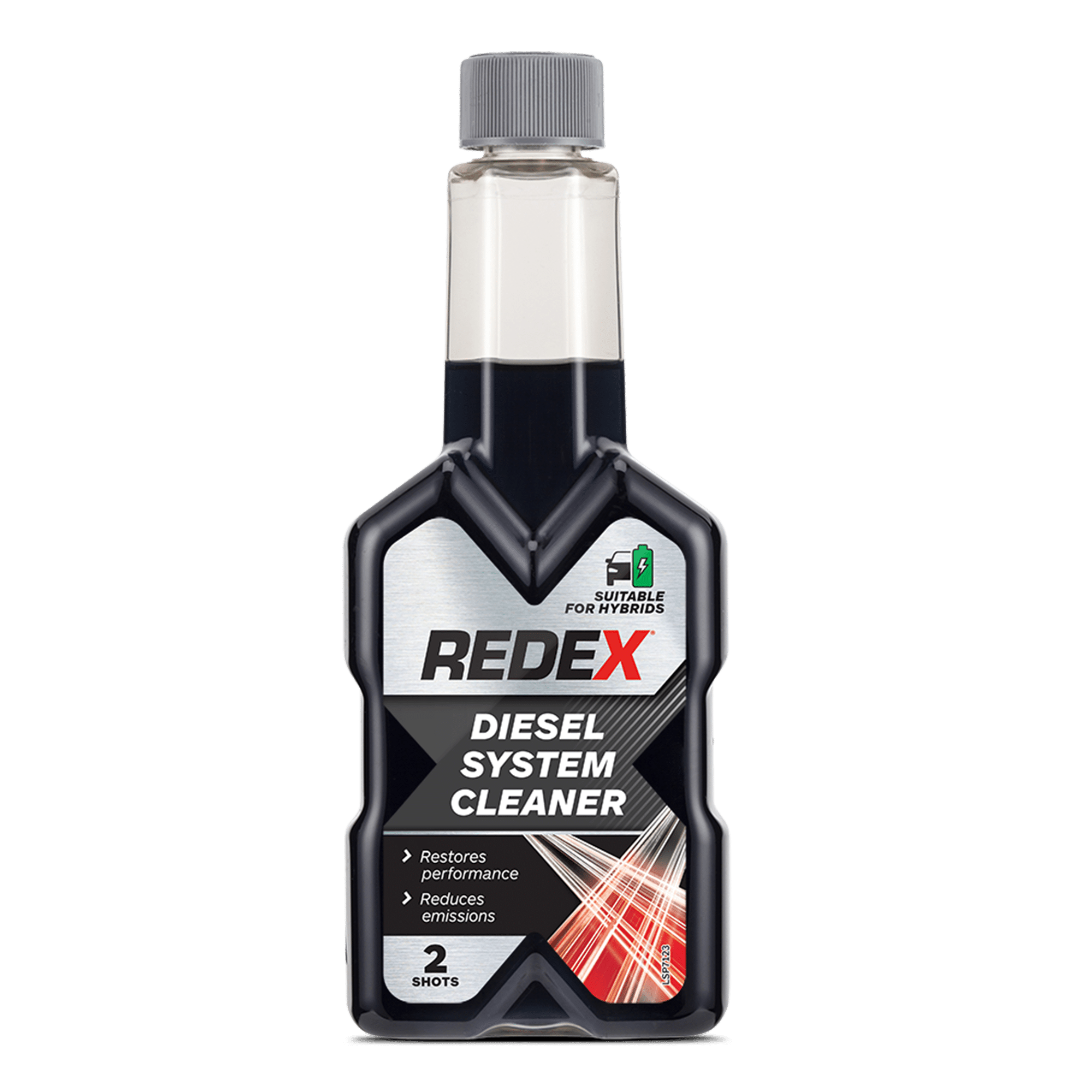
A similar result can be achieved through the use of fuel additives like Redex Petrol Cleaner and Redex Diesel Cleaner. These products allow drivers to save some money on fuel by buying regular fuel and adding their own additives.
Some deposits are harder to shift than others, but thankfully, your fuel filter will catch them before they can cause serious issues. Unfortunately, over time, this filter will become clogged, so it must be replaced. Without replacing it, deposits can find their way into other components, including your fuel injectors.
To prolong the life of your vehicle, too, consider your driving habits. Driving regularly and conservatively can help to reduce deposits while keeping fluids and components active and lubricated.
It’s worth noting that sometimes, due to heavy deposits or electrical faults, fuel injectors might need to be replaced. With the correct tools and know-how, this is possible at home, but we’d recommend a professional undertake this task if you’re uncertain.
Additional tips for maintaining fuel injectors
Fuel injectors are an incredibly important component of your engine, so it’s crucial to look after them as much as possible. This can be achieved, in part, by following a few simple tips.
Despite advancements in technology that limit deposits and sludge, plastic fuel tanks haven’t eliminated deposits from accumulating at the bottom. Driving your car with low fuel regularly can cause these deposits to move through the fuel system and into your fuel injectors, causing blockages.
It’s not just the injectors themselves that you need to consider. The air intake system is partly responsible for the air/fuel mixture that is necessary for ignition. When this becomes blocked, too much fuel is being injected into the engine, relative to the amount of air, causing a cascading effect that can eventually cause damage to components, such as the fuel injectors.
How Much Does It Cost to Replace Fuel Injectors?
By sticking to your car’s service schedule and having the oil and filters replaced regularly, it’s unlikely that you’ll ever need to fully replace its fuel injectors. If, however, your injectors are in a very sorry state after years of neglect, you may have no choice but to replace them.
Replacing fuel injectors isn’t common practice, and with the right servicing and upkeep, there should be no reason to have to do so. But how much does it cost to replace injectors? And what are the advantages of doing so?
Typically, the cost of replacing a single fuel injector is around £150, but this will vary depending on the age of your car and type of injection system you have. Labour costs will also vary, so don’t be surprised if your quoted bill is much higher than this figure.
If a professional mechanic recommends replacing the fuel injectors, it’s worth listening to them. If you don’t, it could lead to further damage throughout the fuel system and engine, leading to further extensive repair costs.
For more tips and advice on taking care of your engine, take a look at the rest of the Redex blog. Or, to browse our complete range of fuel additives, click here to visit the homepage.