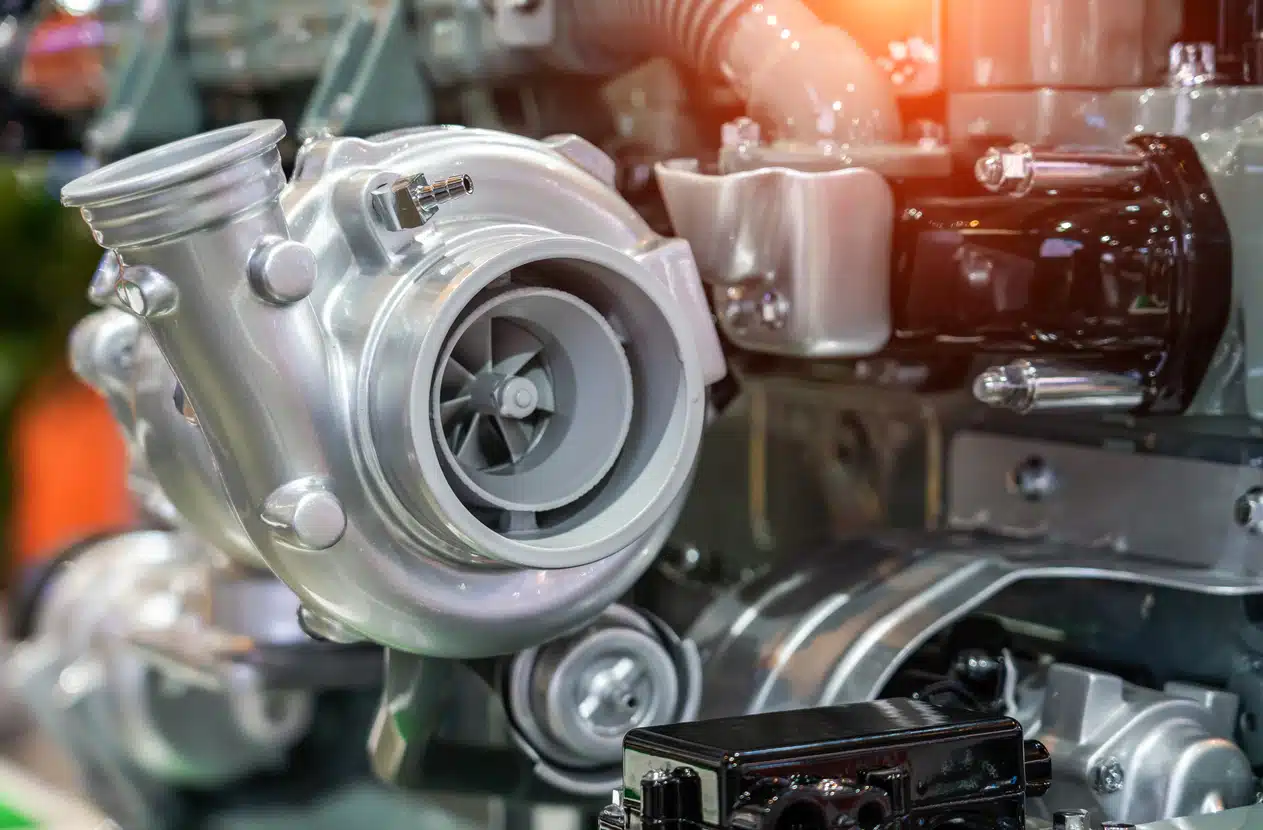
Turbocharged engines are more common than ever, with both performance and economy-focused vehicles adding a turbocharger to get more power and better fuel economy compared to simply adding more cylinders.
However, turbochargers are complex mechanical components that require specialist care to maintain, more so than a standard naturally aspirated engine.
How does a turbo engine work?
Turbos are composed of a shaft with a turbine wheel on one end and a compressor wheel on the other. These are covered by a snail-shaped housing featuring an inlet port, which the wasted exhaust gases enter at a high pressure. As the air passes through the turbine, the turbine spins, and the compressor turns with it, drawing in vast quantities of air which are compressed and passed out of the outlet port.
A pipe feeds this compressed air back into the cylinders via an intercooler, which cools the air before it reaches the cylinders. Cooler air is denser than hot air, meaning it will contain more oxygen. More oxygen in the engine translates to more efficient combustion, resulting in more power and better fuel economy.
As turbos run at such high speeds (up to 250,000 RPM), they typically have an oil cooling system to make sure they don’t run too hot. Most systems also contain a valve known as a ‘wastegate’, which is used to divert excess gas away from the turbocharger when the engine produces too much boost, preventing damage to the turbine by limiting its rotational speed.
Turbocharged engines differ from standard engines in that they make use of wasted exhaust gases to pull more air into the intake valve. While naturally-aspirated engines rely on natural air pressure to draw air into the engine, turbos speed up this process, producing power more economically.

What are the pros of a turbo engine?
Turbochargers offer a range of benefits, hence why they’re now so popular on modern cars. Here, we list the main plus points of a turbocharged engine.
Power
Turbos produce more power in the same-sized engine. That’s because every stroke of the piston generates more power than in naturally-aspirated engines. This means that more cars are now fitted with smaller, turbocharged engines, replacing larger and less economical units. A good example of this is Ford’s decision to replace its standard 1.6L petrol engine with a 1L turbocharged unit, which it calls EcoBoost.
Economy
Because turbochargers can produce the same power output as larger, naturally-aspirated engines, this paves the way for the use of smaller, lighter and more economical engines. Now, all modern diesel cars are fitted with a turbocharger, improving fuel economy and reducing emissions.
Torque and Performance
Even on the smallest engines, turbochargers produce more torque, particularly lower down the rev range. This means cars benefit from strong, nippy performance, which is great around town and helps the engine to feel more refined at higher speeds on motorways and A roads. At low speeds, small, turbocharged engines can outpace cars fitted with larger, naturally-aspirated engines, because of the torque they produce.
Quiet Engines
As the air in a turbocharged engine is filtered through more pipes and components, the intake and exhaust noise is reduced and refined, making for a quieter and smoother engine noise – perhaps one of the most unexpected benefits of a turbocharged engine.
What are the cons of a turbo engine?
While turbos are becoming ever more popular, they do have some pitfalls, which we’ve listed below.
Expensive Repair Costs
Turbochargers add complexity to an engine, with a whole host of other components beneath the bonnet that can fail or develop faults. These problems can be expensive to put right, and can have an impact on other components if they fail.
Turbo Lag
Turbo lag is a brief delay in response after pressing the throttle, which can occur when the engine isn’t producing enough exhaust gas to spin the turbo’s intake turbine quick enough. This only really happens when the car is being driven aggressively, or from a closed throttle position. In high-performance cars, manufacturers prevent turbo lag by adding two turbochargers of differing geometry, rather than one big one with only a single turbine.
Efficiency vs Driving Style
Achieving the claimed efficiency figures of a turbocharged engine requires careful throttle control, whereby the accelerator isn’t pressed too hard. When a turbocharger is ‘on boost’, the cylinders are burning fuel more quickly, leading to poor efficiency. Drivers going from a naturally-aspirated car to a turbocharged model may need to adjust their driving style to maintain good efficiency, particularly when first setting off.

7 ways to maintain your turbo engine
1. Regular Oil Maintenance
Turbo systems are made up of moving parts which spin at incredibly high speeds, and work under intense heat and pressure. This means that they need a constant flow of quality engine oil to lubricate the compression valve and intake and outlet fans, to reduce wear and help them perform at their best. Engine oil’s so important that some high-end turbo systems have a dedicated oil reservoir which circulates oil through the turbo.
For the best performance from a turbocharger, change the oil at least every 5,000 miles, replacing it with a fully-synthetic oil which is the right API for your car’s engine type. Your vehicle’s handbook should recommend the best choice of oil for your car.
2. Warm Up the Engine
Engine oil thickens when it’s cold, meaning that it doesn’t flow as freely around the engine bay. This means that until the oil has warmed and thinned, moving parts are at an increased risk of wear and tear – and this is especially true of turbos.
Each time you get behind the wheel when your car’s cold, keep in mind the engine oil warm-up time, and change your driving style accordingly. Being too aggressive with your accelerator places a massive amount of strain on the oil pump, which has to dole out more pressure to circulate the thick oil through the system. Thick oil is also ineffective at properly lubricating moving parts, which can cause problems in the turbo system.
For the first 10 minutes of driving a cold car, go easy on the accelerator pedal to limit the strain on the oil pump and prevent unnecessary wear and tear on the turbo system. Wait at least 10 minutes before going full throttle, or watch the oil gauge for when it’s reached its optimum temperature – between 90°C and 105°C (194°F to 221°F).
3. Don’t Overstep the Limits of the Turbo when Cruising
Having a turbo system in your car might sound exciting, but often they’re only there to make up the power lost from having a low-capacity engine, particularly in modern eco-friendly hatchbacks. For this reason, it’s important to be aware of the limits of your car’s turbo system, and avoid overdoing it by being too aggressive with the accelerator.
When cruising around town or on the motorway, try not to jab the accelerator. Instead, ease the power on slowly to give the turbo a chance to start spinning freely, and use the accelerator sparingly to maintain your speed. While turbos are rigorously stress-tested and should last the lifetime of the engine, regular bouts of aggressive driving can take their toll and lead to costly issues.
And remember – not only will gentle cruising spare your turbo, but it’ll give you great fuel economy, too.
4. Use Your Gears to Overtake
While a turbo system gives even the smallest engines plenty of power and torque, you should still downshift when overtaking, and not rely on the turbo for all of the car’s accelerative performance.
Whether you’re driving up a long hill, overtaking on an A road or accelerating into an overtaking lane on the motorway, downshifting into a lower gear is a safer long-term option than relying purely on the turbocharger. Gears were built for aiding performance up and down the rev range, so using a combination of gear changes and turbo boost will help to limit the wear and tear suffered through the turbo system.

5. Let the Engine Cool After Driving
Turbos produce a lot of heat while driving, and if you turn off the engine straight away, this residual heat will boil the oil in the turbo system, leading to a build-up of carbon particles that can cause corrosion and premature engine wear.
After driving, get in the habit of leaving the engine running for a couple of minutes at idle, which will cool the turbo enough to switch off the engine without cooking the engine oil.
6. Don’t Blip the Throttle Before Turning the Engine Off
Whether you’re parking or simply want to hear the whizz of the turbocharger, don’t blip the throttle right before turning the ignition off. Pressing the accelerator causes the rotating turbines in the turbo to spin; when the engine is switched off, the flow of oil lubricating these moving parts will stop, but the turbines won’t stop spinning. This puts strain on the bearings, causing friction and a build-up of heat which can lead to a failure in the turbo system.
You can reduce this risk by following the advice in point five – leaving the engine to cool before switching off the ignition.
Turbochargers are a great way to get more performance from even the smallest engines, but they’re not a fix-all, and without proper maintenance, they can lead to significant issues.
7. Properly maintain your air filter
Turbochargers rely on clean air to operate properly. A torn or clogged air filter can lead to dust particles whizzing around the turbocharger at incredibly high speeds, which can cause severe damage, not only to the turbo, but also to other engine components. While regular air filter maintenance is important on all engines, it’s particularly important for vehicles that have a turbocharger.
For more tips on car maintenance, check out our other blogs. For easy access to the highest-quality car maintenance products, take a look at our products page.