From the 1920s, leaded fuel was widely used for decades before it was eventually phased out for a number of reasons and replaced with the unleaded fuel that we use today.
In this post, we’ll explain more about what leaded fuel was and why it was used, why it’s no longer available and what the options are if you still require leaded fuel for your vehicle.
What is leaded fuel?
Leaded fuel was a type of gasoline that had tetraethyl lead added to it. This was primarily to help increase the octane rating of the fuel and improve performance, which was particularly useful for earlier car designs.
It helped to reduce engine knocking, which is when the air and fuel mixture in the cylinder ignites prematurely or unevenly, and also gave a protective coating to engine components to improve longevity and efficiency.
Which cars use leaded fuel?
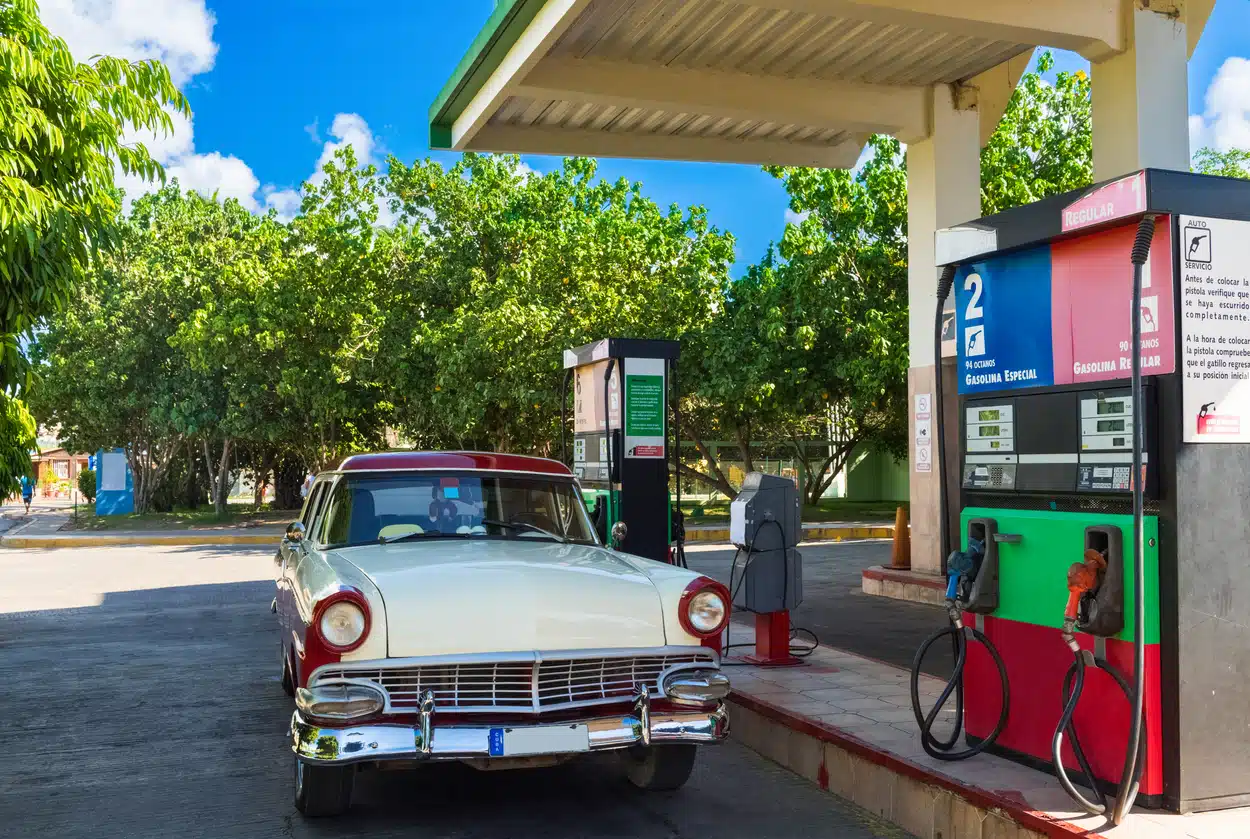
Typically classic and older vehicles built before the 1980s will have been built to run on leaded fuel. Today, those cars are few and far between on the roads, but some classic examples are still being driven.
Older cars which don’t have hardened valve seats were built before unleaded fuel was the standard and will also rely on leaded fuel.

Why was leaded fuel discontinued?
There are several reasons for leaded fuel being no longer available.
Firstly, as new evidence emerged, it became clear that leaded fuel was damaging the health of people and the environment. Lead poisoning from car emissions was having an impact on people’s health. Additionally, the lead was seeping into water and soil, affecting wildlife and crops.
As emission standards developed, it was also found that leaded fuel was damaging catalytic converters – another reason leaded fuel was no longer compatible with modern motoring.
Throughout the 1980s and 90s, governments began banning leaded fuel, and by 2000 it had been banned across the UK and EU. Leaded fuel took much longer to disappear worldwide, though — it wasn’t until 2021 that the last country selling it, Algeria, stopped its supply, officially marking the global end of leaded petrol.
What are the alternative options to leaded fuel?
Thankfully, there are plenty of alternatives to leaded fuel today. Below, we’ll take a look at the available options you can use for your car that previously used leaded fuel.
Use unleaded and an additive
When lead was first banned, petrol stations offered lead-replacement fuel right at the pumps, but they were phased out because of low demand. Today, you can replace the lead yourself by adding something like Redex Lead Replacement to your vehicle when you top up with unleaded petrol. It’s very simple to do and is cheap compared to engine modifications.

Look into engine modification
If you’ve got the spare cash, and want a long-term permanent solution to the problem of requiring leaded fuel, you can have the engine converted to accept unleaded fuel without the need for additives.
Use high-octane fuel
High-octane fuel (97-99 RON) can be used in older engines that require it, such as the iconic Jaguar E-Type. The high octane rating alongside the low ethanol content is perfect to older cars.
So, if you’re running a classic car or an older vehicle and are wondering the best way to keep it fuelled without damaging it, Redex can help. For more help and advice, check out our blog.