At Redex we’re here to help you understand how to care for your car’s systems better, including the engine. A big part of proper engine health is understanding how engines work, including the pistons, cylinders and other key components.
With that in mind, this engine guide focuses on offering some key insights into how your engine components work together so that you can better understand how to maintain and look after your engine.
What are the different engine components?
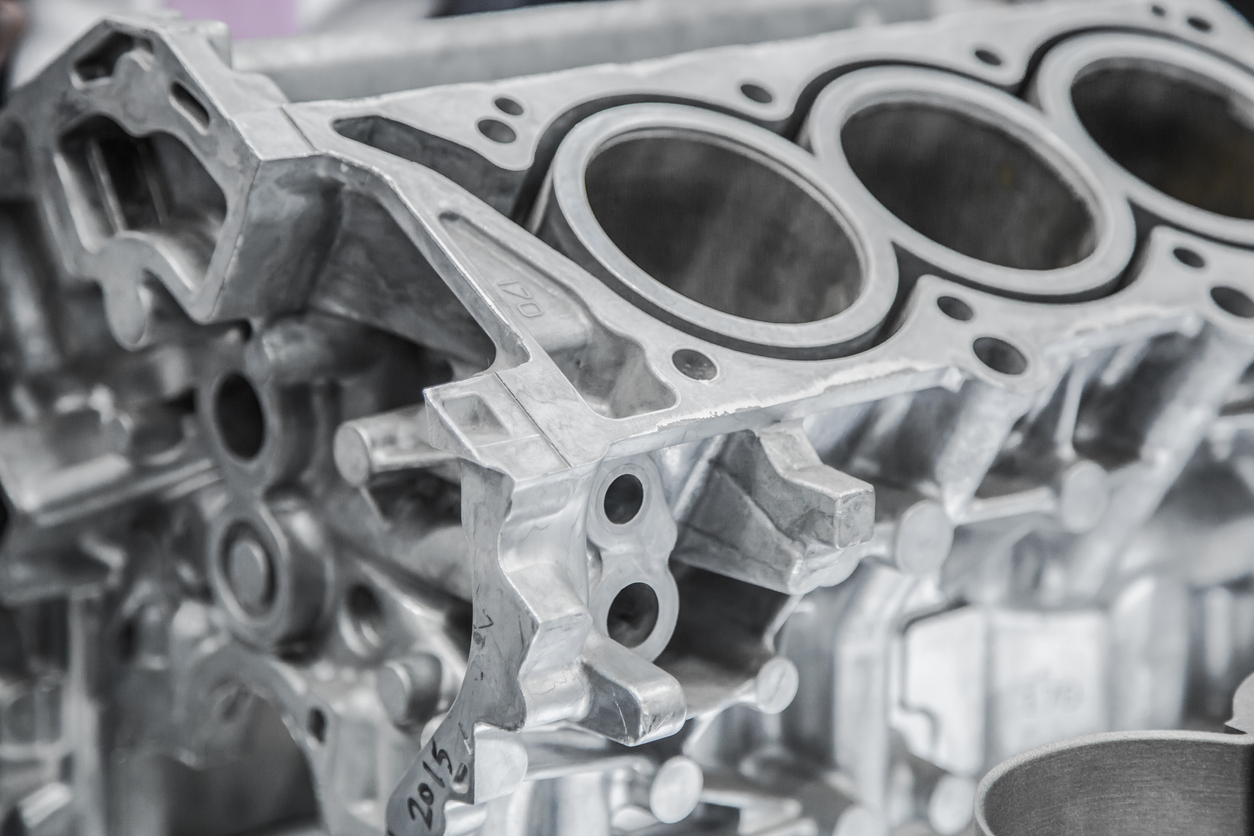
There are many different parts that make up your car’s engine. This includes the engine block, or cylinder block, which contains all of the major components. This is also where the combustion process takes place. The engine block houses the cylinders, water cooling system and crankcase.
Some of the other key engine components we’ll look at in this blog include the cylinders and pistons, crankshaft, camshaft and spark plugs. For each, we’ll explain what they are and how they work.
How do cylinders and pistons work in a car?
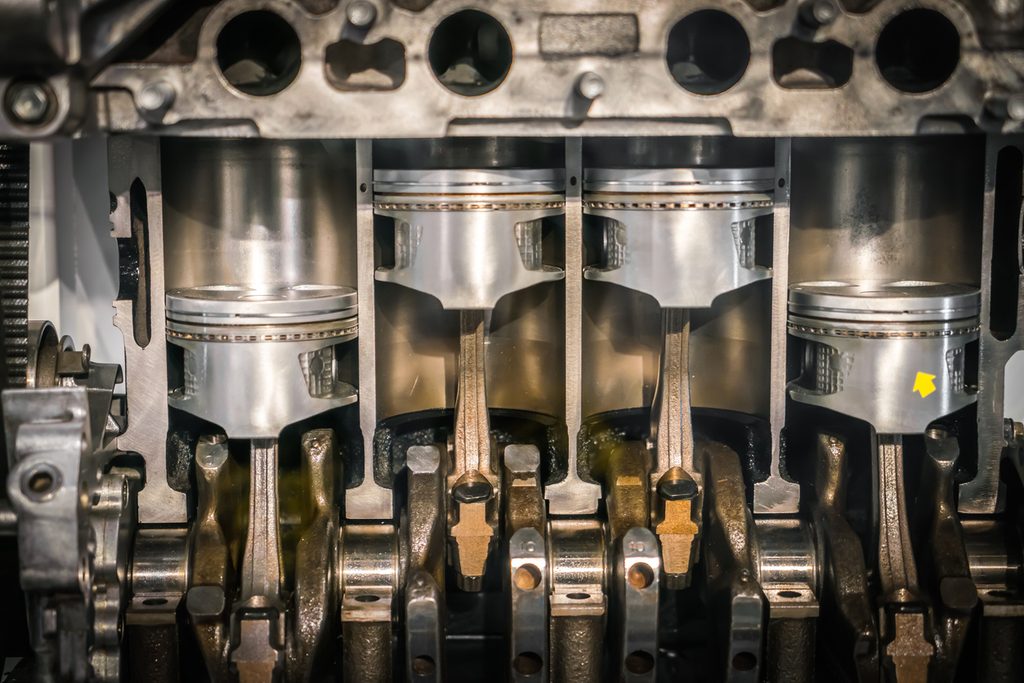
The cylinders are sealed chambers where the fuel is burned, creating the energy needed to power the car. Each cylinder contains a piston that moves up and down, which compresses the fuel. In petrol cars, this compression helps the fuel to mix with air so that the spark plug can ignite the fuel, while in diesel cars the compression ignites and causes combustion.
The top of the cylinder houses an inlet valve and outlet valve. The inlet valve allows fuel and air to enter the cylinder, and the outlet valve allows the exhaust gases to escape.
Depending on the type of car engine, the pistons may be positioned either vertically, horizontally or at an angle. While some reciprocating engines may only have one cylinder (and therefore one piston), car engines typically have three or four cylinders, rising to 12 cylinders for high-end performance cars.
What is a camshaft?
A camshaft is a fairly simple component, consisting of a length of rod with protrusions or lobes. However, it’s vital for opening and closing the intake and exhaust valves. As the camshaft rotates, the lobes push against the valves to open them, allowing them to do their job.
The camshaft is connected to the crankshaft via the timing belt or chain.
What does a crankshaft do?
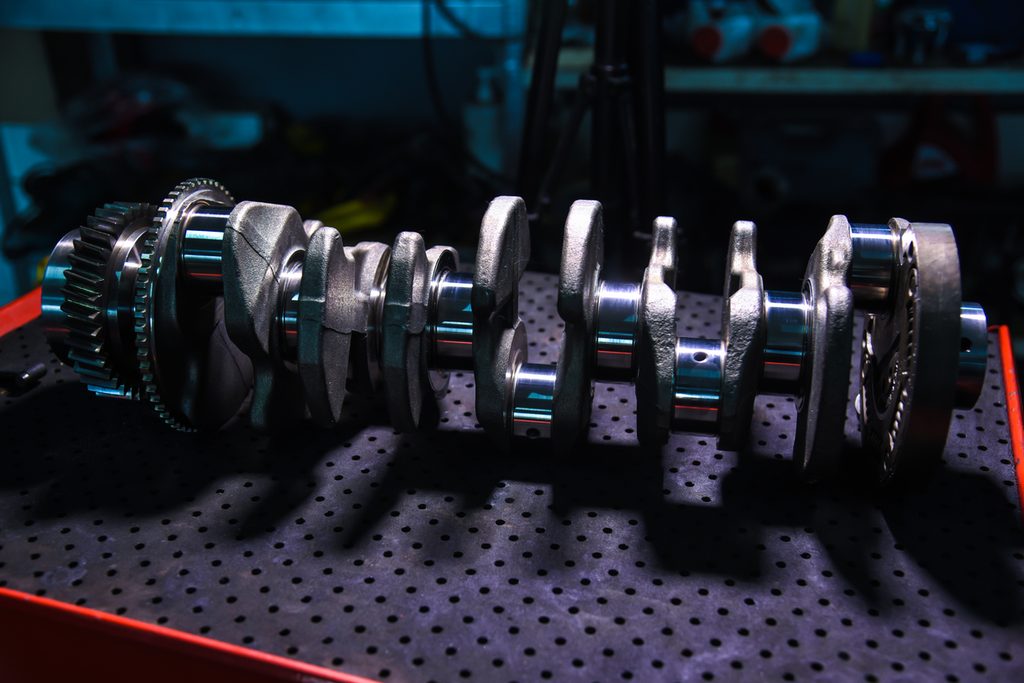
With that in mind, the crankshaft works by converting the up and down motion of the pistons into a rotational movement. Ultimately this helps to turn your wheels. The crankshaft is located at the bottom of the engine block, connected to the pistons by connecting rods.
As the piston moves, the connecting rod pivots and causes the crankshaft to rotate. When each cylinder fires in sequence, the crankshaft rotates smoothly to create a continuous motion. This is transferred to the flywheel, which then sends the power to the transmission.
What are spark plugs?
Spark plugs are critical components that help the ignition process in an engine. When air and fuel enter the cylinder and the piston does its job to compress them, the spark plug delivers the spark that ignites the air-fuel mixture. This ignition forces the pistons to move, which generates the necessary power for the car to move.
Cars typically have one spark plug per cylinder, so a common 4-cylinder engine will have 4 spark plugs, a 6-cylinder engine will have 6, and so on up to 12 in some high-end performance cars. Each spark plug sits at the top of its cylinder, threaded into the cylinder head.
Basic maintenance for your car engine
As well as the above components, your car’s engine is full of other supporting components and systems like the cooling and lubricating systems, fuel injectors and more.
It’s important to maintain your engine in order for it to work efficiently. Keeping your fuel injectors clean is one such area of maintenance, which you can do by using the Redex Petrol System Cleaner. This can help to protect against corrosion and clean the fuel system effectively.
On top of this, you should also consider monitoring your car’s maintenance fluids and checking or changing the oil when necessary. This can ensure the critical parts of the engine are working properly and prevent damage. In particular, engine oil can lubricate the moving metal parts, reducing friction and wear as well as carrying heat and debris away from engine components.